View Aflatoxins Research Papers on blogger.com for free. Skip to main content Simultaneous LC–MS/MS determination of aflatoxin M1, ochratoxin A, deoxynivalenol, de-epoxydeoxynivalenol, α and β-zearalenols and fumonisin B1 in urine as a multi-biomarker method to assess exposure to mycotoxins research activity on the characterization of toxigenic fungi and the development of techniques for detection and quantitation of their mycotoxins. Aflatoxins have been a particular focus of research studies. Aflatoxins are produced primarily by Aspergillusflavus, A. This paper reviews the commodity-wise aetiology and contamination process of aflatoxins and evaluates the potential risk of exposure from common African foods. Possible ways of reducing risk for fungal infection and aflatoxin development that are relevant to the African blogger.com by:
Aflatoxins - Cancer-Causing Substances - National Cancer Institute
Try out PMC Labs and tell us what you think. Learn More. The aflatoxin producing fungi, Aspergillus spp. Here, afla toxin fungus research papers, the chemistry and biosynthesis process of the mycotoxins is discussed in brief along with their occurrence, and the health hazards to humans and livestock. This review focuses on resources, production, detection and control measures of aflatoxins to ensure food and feed safety.
The review is informative for health-conscious consumers and research experts in the fields. Furthermore, providing knowledge on aflatoxins toxicity will help in ensure food safety and meet the future demands of the increasing population by decreasing the incidence of outbreaks due to aflatoxins. Aflatoxins are one of the highly toxic secondary metabolites derived from polyketides produced by fungal species such as Aspergillus flavus, A.
parasiticusand A. nomius Payne and Brown, These fungi usually infect cereal crops including wheat, walnut, corn, cotton, peanuts and tree nuts Jelinek et al.
The major aflatoxins are B1, B2, G1, and G2, which can poison the body through respiratory, mucous or cutaneous routes, resulting in overactivation of the inflammatory response Romani, Food safety is one of the major problems currently facing the world; accordingly, a variety of studies have been conducted to discuss methods of addressing consumer concerns with various aspects of food safety Nielsen et al. Sincethe United States Food and Drug Administration USFDA has restricted the amount of mycotoxins permitted in food products.
The USDA Grain and Plant Inspection Service GPIS have implemented a service laboratory for inspection of mycotoxins in grains. Additionally, the Food and Agricultural Organization FAO and World Health Organization WHO have recognized many toxins present in agricultural products.
When mycotoxins are contaminated into foods, they cannot be destroyed by normal cooking processes. However, there have been many recent advances in food processing developed to keep final food products safe and healthy, such as hazard analysis of critical control points HACCP and good manufacturing practices GMP; Lockis et al.
Moreover, several physical, chemical and biological methods can be applied to partially or completely eliminate these toxins from food and guarantee the food safety and health concerns of consumers. This review provides an overview of aflatoxigenic fungi, chemistry and biosynthesis of aflatoxins, along with their diversity in occurrence, and their health related risks to humans and livestock.
Moreover, the effects of processing techniques on aflatoxins and various physical, chemical and biological methods for their control and management in food are discussed briefly. Ina major outbreak of hepatitis due to aflatoxin was reported in the states of Gujrat and Rajasthan in India, resulting in an estimated deaths Krishnamachari et al. The outbreak lasted for 2 months and was confined to tribal people whose main staple food, maize, was later confirmed to contain aflatoxin.
The preliminary analysis confirmed that consumption of A. flavus had occurred Krishnamachari et al. Another outbreak of aflatoxin affecting both humans and dogs was reported in afla toxin fungus research papers India in Tandon et al. A major aflatoxin exposure outbreak was subsequently documented in Kenya in Ngindu et al. Sincemultiple aflatoxicosis outbreaks have been reported worldwide, resulting in acute illness and deaths Centers for Disease Control and Prevention [CDCP], ; Azziz-Baumgartner et al, afla toxin fungus research papers.
Most outbreaks have been reported from rural areas of the East Province of Kenya in and occurred because of consumption of home grown maize contaminated with molds. Preliminary testing of food from affected areas revealed the presence of aflatoxin as reported in Ngindu et al. Incountries in Europe including Romania, Serbia, and Croatia reported the nationwide contamination of milk with aflatoxin 1.
The major sources of aflatoxins are fungi such as A. flavus, A. nomius Kurtzman et al. Reiter et al.
There are more than 20 known aflatoxins, but the four main ones are aflatoxin B1 AFB1aflatoxin B2 AFB2aflatoxin G1 AFG1and aflatoxin G2 AFG2; Inan et al. The Aspergillus species are an industrially important group of microorganisms distributed worldwide.
niger has been given Generally Recognized as Safe GRAS status by the USFDA Schuster et al. However, some species have negative impacts and cause diseases in grape, onion, afla toxin fungus research papers, garlic, peanut, maize, coffee, and other fruits and vegetables Lorbeer et al.
Moreover, Aspergillus section nigri produces mycotoxins such as ochratoxins and fumonisins in peanut, maize, and grape Astoreca et al. Plant—pathogen interactions have been studied using molecular markers such as green fluorescent protein GFP isolated from Aequorea victoria Prasher et al.
The GFP gene has been successfully inserted into Undifilum oxytropis Mukherjee et al. flavus and A. parasiticus infect many crops in the field, during harvest, in storage, and during processing.
flavus is dominant in corn, cottonseed, and tree nuts, whereas A. parasiticus is dominant in peanuts. flavus consists of mycelium, conidia, or sclerotia and can grow at temperatures ranging between 12 and 48°C Hedayati et al. flavus produces AFBI and AFB2, whereas A. parasiticus isolates produce AFGI, AFG2, afla toxin fungus research papers, AFM1, AFBI, and AFB2.
flavus produces a number of airborne conidia and propagules that infect plants such as cotton Lee et al. A high number of propagules was reported in soil, air, and on cotton leaves during mid- to late August, while soilborne inoculum increased drastically between April and December in cotton fields in Arizona Ashworth et al. This fungus can even colonize moribund rye cover crop and peanut fruit debris Griffin and Garren, Among the mycotoxins affecting food and feed, aflatoxin is the major one in food that ultimately harms human and animal health Boutrif, Chemically, aflatoxins AFTs are difuranocoumarin derivatives in which a bifuran group is attached at one side of the afla toxin fungus research papers nucleus, while a pentanone ring is attached to the other side in the case of the AFTs and AFTs-B series, or a six-membered lactone ring is attached in the AFTs-G series Bennett and Klich, ; Nakai et al.
The physical, biological and chemical conditions of Aspergillus influence the production of toxins. Among the 20 identified AFTs, AFT-B 1afla toxin fungus research papers, and AFT-B 2 are produced by A.
flavuswhile AFT-G 1 and AFT-G 2 along with AFT-B 1 and AFT-B 2 are produced by A. parasiticus Bennett and Klich, AFT-B 1AFT-B 2AFT-G 1and AFT-G 2 are the four major naturally produced aflatoxins Pitt, AFTs-M 1 and AFTs-M 2 are derived from aflatoxin B types through different metabolic processes and expressed in animals and animal products Weidenborner, ; Wolf-Hall, AFT-B 1 is highly carcinogenic Squire,as well as heat resistant over a wide range of temperatures, including those reached during commercial processing conditions Sirot et al.
The biosynthetic pathway of aflatoxins afla toxin fungus research papers of 18 enzymatic steps for conversion from acetyl-CoA, and at least 25 genes encoding the enzymes and regulatory pathways have been cloned and characterized Yu et al. The gene comprises 70 kb of the fungal genome and is regulated by the regulatory gene, aflR Yabe and Nakajima, ; Yu et al.
The metabolic grid involved in the aflatoxin biosynthesis Yabe et al. Hydroxyversicolorone HVN is converted to versiconal hemiacetal acetate VHA by a cytosol monooxygenase, in which NADPH is a cofactor Yabe et al. Monooxygenase is encoded by the moxY gene, which catalyzes the conversion of HVN to VHA and the accumulation of HVN and versicolorone VONE afla toxin fungus research papers in the absence of the moxY gene Wen et al. Various genes and their enzymes are involved in the production of sterigmatocystin ST dihydrosterigmatocystin DHSTwhich are the penultimate precursors of aflatoxins Cole and Cox, The aflatoxin biosynthesis gene nor-1which was first cloned in A.
Parasiticusis named after the product formed by the gene during biosynthesis Chang et al. These genes named according to substrate and the product formed nor-1 norsolorinic acid [NOR]norAnorB, avnA averanti [AVN]avfA averufin [AVF]ver-1 versicolorin A [VERA]verA and verB while those based on enzyme functions fas-2 FAS alpha subunitfas-1 FAS beta subunitpksA PKSadhA alcohol dehydrogenaseestA esterasevbs VERB synthasedmtA mt-I; O -methyltransferase IomtA O -methyltransferase AordA oxidoreductase AcypA cytochrome P monooxygenasecypX cytochrome P monooxygenaseafla toxin fungus research papers, and moxY monooxygenase.
Initially, the aflatoxin regulatory gene was named afl-2 in A. flavus Payne et al. parasiticus Chang et al. However, it was subsequently referred to as aflR in A. nidulans because of its role as a transcriptional activator. Previous studies have shown that aflA fas-2aflB fas-1and aflC pksA are responsible for the conversion of acetate to NOR Townsend et al, afla toxin fungus research papers.
Moreover, the uvm8 gene was shown to be essential for NOR biosynthesis as well as aflatoxin production in A. The amino acid of sequence of the gene is similar to that of the beta subunit of FASs FAS1 from Saccharomyces cerevisiae Trail et al.
FAS forms the polyketide backbone during aflatoxin synthesis; hence, the uvm8 gene was named fas-1 Mahanti et al.
Fatty acid syntheses FASs is responsible for sterigmatocystin ST biosynthesis in A, afla toxin fungus research papers. nidulans and further identified two genes viz. Aflatoxins are found in various cereals, oilseeds, spices, and nuts Lancaster et al. These Aspergillus afla toxin fungus research papers among themselves and produce aflatoxins, which contaminate grains and cereals at various steps during harvesting or storage.
Fungal contamination can occur in the field, or during harvest, transport and storage Kader and Hussein, Aflatoxins contamination of wheat or barley is commonly happen by the result of inappropriate storage Jacobsen, AFTs infect humans following consumption of aflatoxins contaminated foods such as eggs, meat and meat products, milk and milk products, Bennett and Klich, ; Piemarini et al.
Mycotoxins, including aflatoxin, have affected most crops grown worldwide; however, the extent of aflatoxin toxicity varies according to the commodities Abbas et al. Aflatoxin can infect crops during growth phases or even after harvesting Kumar et al. Exposure to this toxin poses serious hazards to human health Umoh et al. Commodities such as corn, peanuts, pistachio, Brazil nuts, copra, and coconut afla toxin fungus research papers highly prone to contamination by aflatoxin Idris et al.
However, agricultural products such as cocoa beans, linseeds, melon seeds and sunflower seeds are seldom contaminated Bankole et al. Aflatoxin was on the Rapid Alert System for Food and Feed RASFF of the European Union in because of its afla toxin fungus research papers effects European Commission,and the International Agency for Research on Cancer IARC later categorized AFB1 as a group I carcinogen for humans Seo et al.
Despite several research and control measures, aflatoxin is still a major threat to food and agricultural commodities.
Aflatoxin are specifically target the liver organ Abdel-Wahhab et al. Early symptoms of hepatotoxicity of liver caused by aflatoxins comprise fever, malaise and anorexia followed with abdominal pain, vomiting, and hepatitis; however, cases of acute poisoning are exceptional and rare Etzel, Chronic toxicity by aflatoxins comprises immunosuppressive and carcinogenic effects.
Evaluation of the effects of AFT-B 1 on splenic lymphocyte phenotypes and inflammatory cytokine expression in male F rats have been studied Qian et al. AFT-B 1 reduced anti-inflammatory cytokine IL-4 expression, but increased the pro-inflammatory cytokine IFN-γ and TNF-α expression afla toxin fungus research papers NK cells. These findings indicate that frequent AFT-B 1 exposure afla toxin fungus research papers inflammatory responses via regulation of cytokine gene expression.
MYCOTOXICOSIS
, time: 2:00Aflatoxins Research Papers - blogger.com
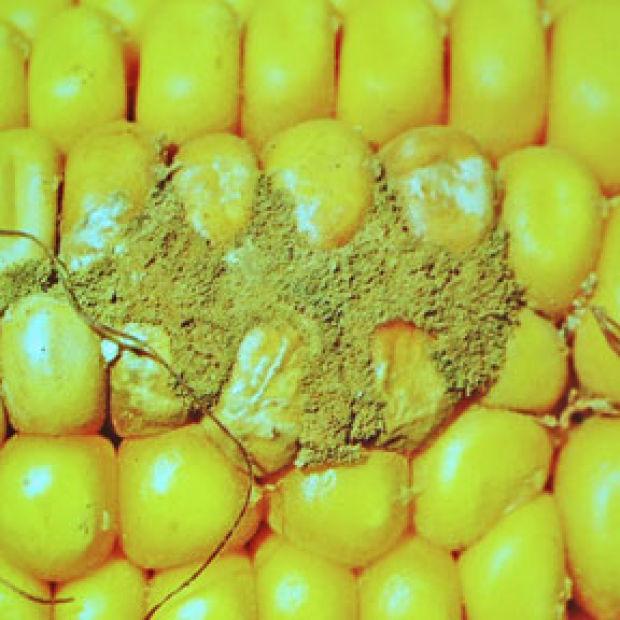
DOI: /blogger.com Abstract. Hepatocellular carcinoma (HCC) is one of the leading causes of cancer deaths worldwide, primarily affecting populations in the developing countries. Aflatoxin, a food contaminant produced by the fungi Aspergillus flavus and Aspergillus parasiticus, is a known human carcinogen that has been shown to be a causative agent in the Cited by: 98 aflatoxin, aflatoxin B1, is a carcinogen. This raises human health concerns because aflatoxin can appear in the milk of dairy cows fed contaminated corn. How to prevent aflatoxin in corn In Iowa, problems associated with Aspergillus and aflatoxins are most common in hot, dry years. The fungus survives in crop residue and soil, and produces research activity on the characterization of toxigenic fungi and the development of techniques for detection and quantitation of their mycotoxins. Aflatoxins have been a particular focus of research studies. Aflatoxins are produced primarily by Aspergillusflavus, A.

No comments:
Post a Comment